About Saint Lucia
Overview:
Saint Lucia is a sovereign island state in the Eastern Caribbean renowned for its breath-taking natural beauty, vibrant culture, and strong democratic traditions. With a population of just over 180,000, it punches above its weight on the world stage, boasting two Nobel Laureates and a proud tradition of diplomacy, education, and creativity. It is a sovereign parliamentary democracy under a constitutional monarchy and a member of the Commonwealth.
Global-Geography+1. Castries, located on the northwest coast, serves as the nation’s capital.
Wikipédia+1. Saint Lucia’s official language is English, although Saint Lucian Creole (French-based) is widely spoken, reflecting the island’s rich cultural and historical heritage.
Nature's Symphony
Quick Facts:
- Capital: Castries
- Area: 238 square miles
- Official Language: English
- Currency: Eastern Caribbean Dollar (XCD)
- Population: Approx. 185,000
- Political Status: Independent nation (since 22 February 1979)
Capital City: Castries
The political and economic heart of the island. Home to Parliament, government ministries, and the Cathedral of the Immaculate Conception. Castries is the seat of government and the heart of commerce and diplomacy in Saint Lucia. It is home to the Government House, Parliament, Prime Minister’s Office, and key ministries including External Affairs, Health, and Education.
Population & Area:
The total land area of Saint Lucia is approximately
617 km² (238 sq mi).
globalgeografia.com+2Citypopulation+
According to the 2022 census, the population is around 183,600 people, with the highest concentrations in the northern and central districts, notably Gros-Islet and Castries. stats.gov.lc+1
The population density is among the highest in the Eastern Caribbean, reflecting both the island’s small size and its vibrant coastal settlements.
geo-ref.net+1
Culture and Heritage:
Saint Lucia’s culture is rooted in African, French, and English influences, shaped by a rich oral tradition and vibrant festivals. The island is a guardian of Kweyol culture, reflected in its food, language, music, and rituals.
Notable cultural highlights:
- Jounen Kwéyòl (Creole Day) – island-wide celebration of heritage in October
- La Woz and La Magwit – traditional flower festivals honoring patron saints
- Saint Lucia Jazz & Arts Festival – globally recognized music event in May
- Carnival – vibrant display of dance, rhythm, and creativity (June–July)
Proud Achievements:
- Nobel Laureates:
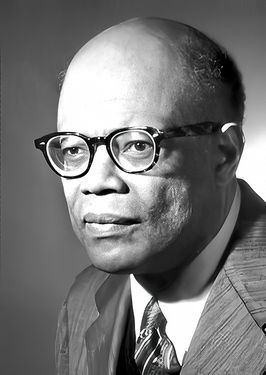
- Sir Arthur Lewis – Nobel Prize in Economics (1979) A pioneer in development economics and the first black man to receive a Nobel in a field other than peace.
- Sir Derek Walcott – Nobel Prize in Literature (1992) A globally celebrated poet and playwright, whose work captured the Caribbean soul and shaped postcolonial literary thought.
- Sporting Greatness:
- Julien Alfred – World Athletics Gold Medalist, 2024. Julien Alfred’s historic victories on the world stage have inspired a new generation of Saint Lucians. Her speed, discipline, and humility have made her a national treasure and a global ambassador for Saint Lucian excellence. “Her achievements remind us that even from a small island, greatness can emerge.” — Excerpt from national tribute
- Dame Marie Selipha “Sessenne” Descartes: Celebrated folk singer and cultural icon, keeper of the Kweyol oral tradition. National Cultural Hero.
Key Cultural Events:
| Event | Description | Month |
|---|---|---|
| Independence Celebrations | National pride, civic ceremonies, cultural displays | February (22nd) |
| Saint Lucia Jazz & Arts Festival | International music and art performances featuring Caribbean and global acts | May |
| Saint Lucia Carnival | Colorful parades, calypso, soca, and steel pan competitions | June - July |
| La Woz (The Rose) | One of two traditional flower festivals, honoring Saint Rose of Lima | August (30th) |
| La Magwit (The Marguerite) | Companion festival honoring Saint Marguerite Mary Alacoque | October (17th) |
| Jounen Kwéyòl (Creole Day) | A major island-wide celebration of Creole heritage with food, music, dress | October (last Sunday) |
These events provide not just entertainment, but serve as vehicles for cultural preservation, creative expression, and community pride, both in Saint Lucia and across its diaspora.
Administrative Structure:
Saint Lucia is a sovereign parliamentary democracy grounded in the Westminster model and operating under a constitutional monarchy. His Majesty King Charles III is the Head of State and is represented locally by the Governor-General.
The governance structure consists of:
Executive Branch
- The
Prime Minister, who serves as Head of Government, is
an elected Member of the House of Assembly. After general elections, the Governor-General appoints as Prime Minister the elected representative who is best able to command the confidence of the majority in the House, typically the leader of the winning political party.
The Prime Minister selects Ministers who, together, form the Cabinet responsible for national governance.
Legislative Branch
Saint Lucia’s Parliament is
bicameral, comprising:
- The House of Assembly – 17 members, all directly elected by universal adult suffrage during general elections held every five years (or earlier if Parliament is dissolved).
- The Senate – 11 appointed members.
Senators are appointed by the Governor-General as follows:
- 6 on the advice of the Prime Minister
- 3 on the advice of the Leader of the Opposition
- 2 at the Governor-General’s discretion
Judiciary
The judicial system is independent and forms part of the
Eastern Caribbean Supreme Court. Final appeals may be made to the
Judicial Committee of the Privy Council in the United Kingdom, with the
Caribbean Court of Justice serving specific regional functions.
Local Administration
The country is divided into
ten administrative districts (quarters), each with local mechanisms such as constituency councils supporting local development and administrative services.
Saint Lucia is divided into
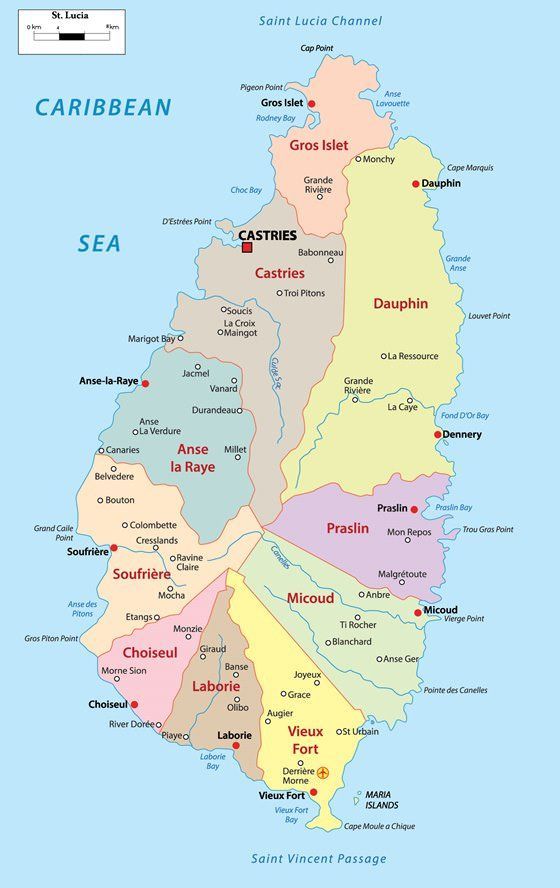
ten administrative districts (also called quarters): Anse-la-Raye, Canaries, Castries, Choiseul, Dennery, Gros-Islet, Laborie, Micoud, Soufrière, and Vieux Fort.
- Online Courses+1
Ongoing Engagements:
Saint Lucia actively cooperates with regional and French-Antillean partners across multiple domains:
- Bilateral Security Cooperation
The recent 9th France–Saint Lucia Joint Security Commission meeting, held in September–October 2025, resulted in an agreement to deepen law enforcement and maritime security coordination. Martinique.gouv+1
Key commitments include intelligence-sharing, joint training, and enhanced customs and extradition cooperation.
sports.govt.lc
Notably, a Saint Lucian police officer is scheduled to be assigned to the Consulate General in Fort-de-France (Martinique) beginning in early 2026. St Vincent Times+1
- Economic & Trade Cooperation
In 2024, chambers of commerce from Martinique and Guadeloupe carried out a joint export mission to Saint Lucia, under the framework of the Organisation of Eastern Caribbean States (OECS). pressroom.oecs.int
This mission brought together entrepreneurs, business leaders, and government interlocutors to explore trade, investment, and sustainable development opportunities. stluciachamber.org+1 - Humanitarian & Social Partnership
The Ministry of Equity, Social Justice, and Empowerment of Saint Lucia has strengthened ties with Martinique-based donor organizations. Saint Lucia - Ministry of Education
Through these collaborations, the Consulate has helped channel donations, such as medical supplies and prescription eyewear from Martinique’s Rotary and Lions Clubs to support Saint Lucian communities.
health.govt.lc
These ongoing efforts underscore the shared values of solidarity, social justice, and resilience in the face of regional challenges like natural disasters.
Saint Lucia - Ministry of Education+1
- Maritime Boundary Agreement
Saint Lucia and France (representing Martinique) maintain a formal maritime boundary defined by a delimitation treaty signed in 1981. Wikipédia
This treaty underpins cooperative management of maritime space and reinforces the legal foundation for security and environmental collaboration.